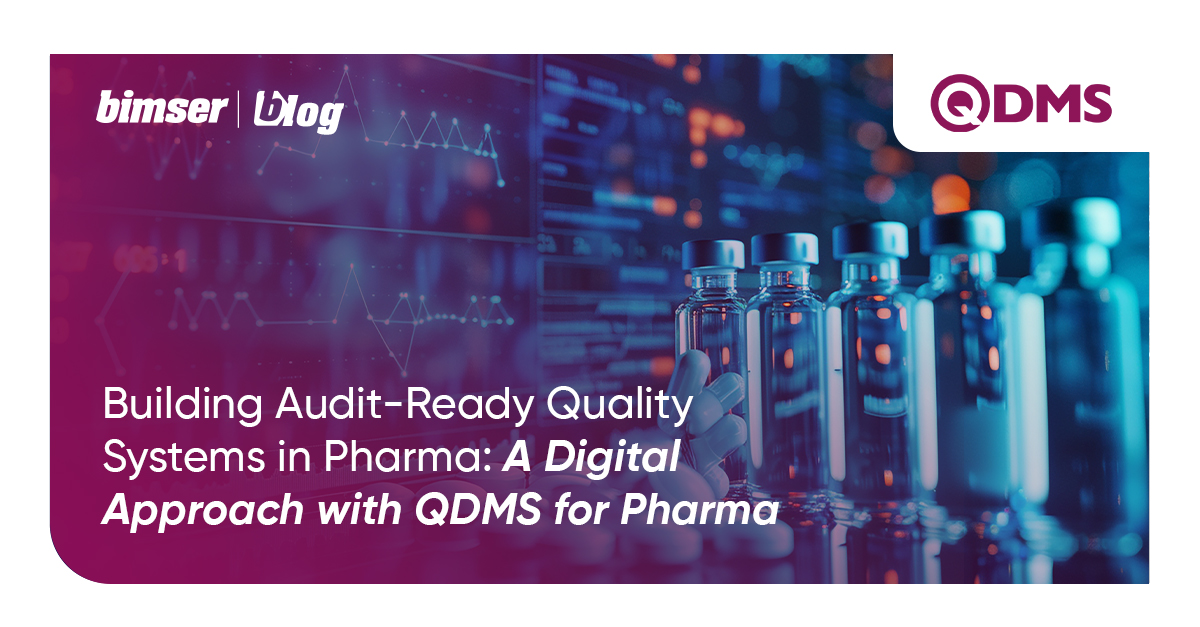
Building Audit-Ready Quality Systems in Pharma: A Digital Approach with QDMS for Pharma
The pharmaceutical industry is a highly regulated field since the activities conducted in this sector have a direct impact on patient safety. Although inspections by FDA, GMP, and GxP are usually planned in advance, they still require a lot of preparation and can be very stressful for organizations. Organizations usually look at inspections as a last-minute control check and put off preparations until the deadline is near. This generally results in serious problems such as missing documents, discrepancies, and lack of traceability.
In today’s quality management paradigm, the phrase “audit readiness is not an event, but a continuous process” has gained increasing importance. Audit readiness refers to the process of being ready for audits through the maintenance of a stable and well-controlled quality system at all times, and not just during the time of the inspection.
Limitations of the Traditional Quality Management Approach
Many pharmaceutical companies still use separate and disconnected systems to manage their quality processes. Documents are kept in Excel files, CAPA is tracked by email, and each department stores its own records. While these methods may seem practical at first glance, they can lead to significant problems over time.
In decentralized quality systems it is unclear which document is current, and this creates version confusion. It becomes difficult to track which action corrected a particular error. The inability to quickly access necessary information during an audit results in both time loss and a stressful audit process.
These manually executed processes fall short of meeting the transparency, traceability, and verifiability requirements expected by regulations. For this reason, the traditional quality management approach is not sustainable in the long term and in the face of increasing regulatory burdens.
What Does It Mean to Be Audit-Ready?
Audit readiness is not just about having documents on hand. True audit readiness means that quality processes are clearly defined, consistently applied, and managed in a fully traceable way from start to finish. There should be a clear and logical link between documents, actions, and records. This link should be easy to demonstrate during an audit.
Auditors focus more on the following elements than on the existence of records:
- Traceability: It should be possible to clearly trace which process caused a deviation, which CAPA was opened, and how it was closed.
- Consistency: Procedural, operational, and recorded data should not conflict with each other.
- Verifiability: Data should be complete, accurate, time-stamped, and stored with a history of changes.
It is easier to be compliant with regulations when the structure is audit-ready. This is because it is easier to standardize processes and identify errors early. Through this method, audits are no longer considered crises but are part of the daily quality management process.
QDMS for Pharma: A Digital Quality Management Approach
The traditional and disjointed approach to quality management forces a reactive approach on organizations in response to increasing demands from regulations. Hence, audit preparation becomes a short-term process focused on stockpiling documents rather than managing processes. QDMS for Pharma addresses this challenge by transforming quality management into a digital, integrated, and sustainable system. It also makes audit readiness a structured and continuous practice.
QDMS for Pharma helps centralize the key quality processes like document management, CAPA, audit management, training management, change and deviation management, and supplier evaluation on a single platform. This ensures that there are no gaps between the processes and that the quality system acts as an organizational memory.
The key contributions this approach provides to the organization are as follows:
- Centralized and Standardized Process Management: All documents, activities, and records are stored in one system, thus eliminating confusion of versions. The processes are standardized, and differences in process implementation are reduced among departments. This results in a better-controlled quality system.
- Traceability and Data Integrity: CAPA and actions are directly linked to audit findings, deviations, changes, and incident reports. All transactions are recorded and become traceable retrospectively through the audit trail mechanism.
- Proactive Risk Management and Operational Transparency: Role-based authorization ensures that the right person has access to the right data. Dashboards and reports enable measurable quality performance. Delays, disrupted processes, and risks are proactively made visible by the system. Mobile applications and notifications enable quality management to be carried out in the field, not limited to the office.
- Systematic Regulatory Compliance: The system is designed in accordance with GxP requirements and includes a set of pre-implemented and approved validation documents. It is also compliant with ISO 13485, FDA 21 CFR Part 11, and EU GMP Annex 11. This means that companies can concentrate on their own settings in the validation process without having to create documents from scratch. This makes the quality processes auditable and reliable. Thus companies are always ready for audits.
- Manageable Audit Processes: Digital audit processes make it possible to have instant access to the required documents and to present evidence right through the system. Audits are no longer stressful events but rather organized processes.
Being Prepared for Audits is a Culture: Build This Culture Today
Having an audit-ready structure ensures that regulatory compliance becomes less of a challenge. This is because it ensures that processes are standardized, and errors are identified early. With this approach, audits become an integral part of daily quality management, rather than a crisis that occurs periodically.
If you are interested in understanding how this change can be brought about in your organization, you can learn more about the QDMS for Pharma approach through a demo.