From Acquisition to Retirement: A Practical Guide to Asset Lifecycle Management
Managing assets is about more than just tracking equipment and scheduling maintenance. This process encompasses managing an asset from the decision to purchase it to its decommissioning, considering its cost, performance, risk and use value. When organizations maintain effective asset management, they can make better operational and investment decisions.
What Is Asset Lifecycle Management?
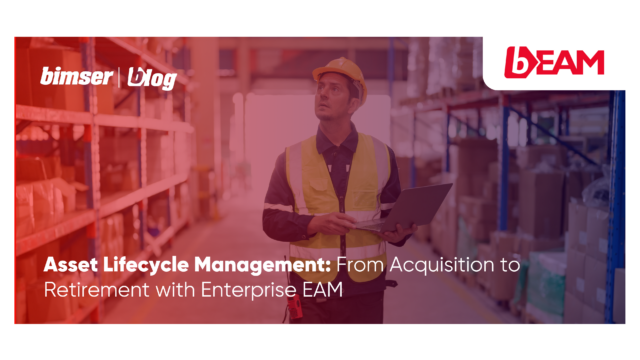
The asset lifecycle includes the entire process from the planning and procurement of a physical asset through its activation, use, maintenance, relocation, and decommissioning at the end of its useful life.
Asset lifecycle management focused on managing every stage of this process in terms of cost, performance, risk and reliability. The goal of this process is more than just extending the asset’s lifecycle. It also includes optimizing maintenance costs, increasing operational efficiency and making more accurate investment decisions.
Asset lifecycle management involves much more than basic inventory tracking. It brings together information from every stage of an asset’s lifecycle on a single platform.
This enables organizations to respond to questions like:
- What is the operating cost?
- How often does it fail?
- Do maintenance activities improve its reliability?
- When does replacing it become more cost-effective than repairing it?
- How much value does it add to operational performance?
As part of the enterprise asset management strategy, it ensures that decisions are based on real performance data rather than fragmented data or assumptions.
The Key Stages of an Asset’s Lifecycle
Asset lifecycle stages can vary depending on the organization. Even so, most physical assets follow a lifecycle that includes the following stages:
- Planning and Acquisition: The lifecycle begins before an asset is included in the business inventory. This phase assesses how profitable the asset will be for the business and what benefits it will provide. This includes business requirements, expected service life, cost, supplier reliability and compliance needs.
- Registration and Commissioning: After purchasing an asset, information on its technical specification, warranty, location, maintenance, and ownership should be provided completely. The accuracy of these records is important for every decision the business makes.
- Operation and Assignment: After using an asset, there should be a record of its location, user, efficiency, and performance.
- Maintenance and Calibration: Preventive maintenance, inspections, repairs and calibration activities help maintain asset performance. Each maintenance activity is recorded, creating a reliable history for future lifecycle decisions.
- Transfer or Location Changes: There is a possibility that an asset can be transferred to other facilities, departments or even production lines at any time during its lifecycle. This ensures proper tracking of the assets.
- Performance and Cost Analysis: Maintenance cost, reliability and performance of the asset are analyzed. This supports the determination of whether the asset has been valuable.
- Retirement and Disposal: Planning should consider the remaining value of the asset, disposal requirements and environmental compliance. Data archiving and backup planning should also be done as part of this process.
Why Centralized Asset Data Matters
The data about the assets can be stored separately in different systems, which makes it difficult for organizations to get a holistic view of the assets. The data about ownership, location, warranty, cost, maintenance, and service life of the asset is in separate files. Such an approach also complicates evaluating asset performance, planning maintenance, and making repair or replacement decisions. Centralized asset management software solves this problem by bringing all asset data together in a single platform.
Connecting Maintenance History with Lifecycle Decisions
The maintenance history of an asset is extremely useful to know how the asset has performed during its lifetime; it provides information beyond the life of the asset. This includes the maintenance audits, preventative and corrective maintenance information, downtime, cost of repairs, and use of spare parts.
This will enable organizations to learn the patterns of performance and the real cost of ownership of assets and make more informed decisions about their maintenance.
How to Evaluate Repair, Replace or Retire Decisions
When evaluating the service life of an asset, age alone is not sufficient. Two pieces of equipment of the same age may be in completely different conditions in terms of performance and maintenance history.
The following factors should be considered together when deciding whether to repair, replace or retire an asset:
- Maintenance costs,
- Frequency of failure,
- Reliability,
- Operational criticality,
- Remaining useful life,
- Availability of spare parts.
Bringing all asset data together in one platform gives organizations a complete view of asset performance. Repair, replacement or retirement decisions are based on real data rather than assumptions. This enables optimization of maintenance costs and increases the value gained from assets.
How bEAM Creates End-to-End Asset Visibility
Managing assets throughout their lifecycle requires a single platform where organizations can access asset information, maintenance records, costs, and performance data in one place. bEAM brings all of this together, giving maintenance teams a clear view of every asset and its history
With bEAM, organizations can:
- Build structured asset hierarchies,
- Plan, assign and track maintenance work orders,
- Track asset locations, transfers and assignments,
- Connect maintenance, cost and performance data,
- Integrate with ERP, IoT and industrial systems,
- Monitor maintenance KPIs with customizable dashboards and reports,
- Support regulatory compliance with centralized documentation.
Ready to gain complete visibility into your assets? Request a demo today and discover how bEAM helps you manage the entire asset lifecycle, from acquisition to retirement, on a single platform.